
My name is Nikki Anne Ellison. Being an author is all I’ve ever wanted to be, so I got started on my writing career at eight years old. I wrote my first (truly awful) novel at thirteen—my attempt at writing a mystery like The Hardy Boys and Nancy Drew. Despite that setback, I haven’t stopped writing.
I graduated as an English major from BYU, where I was in the marching band, went on a study abroad to England, Scotland, and Wales, and took as many creative writing classes as I could. My hobbies include cooking, hiking, swimming, doing dishes and laundry (yes, I’m one of those people), and reading. I love tigers, sea otters, and the ocean. One of my favorite pass times is falling in love with fictional men. I have two house tigers, who (thankfully) act like tabby cats most of the time. I want to live in paradise with my family. I am a member of The Church of Jesus Christ of Latter-day Saints.
As a writer, I believe my voice is unique and a reprieve from today’s popular literature, which is filled with the celebrated morally gray character, edgy and dangerous behavior, lust, and the ends justifying the means. Instead, I write characters that I would want to meet in real life because they share my values, morals, and love of correct principles. I work hard to ensure my characters are like real people, in spite of any fantastical setting.
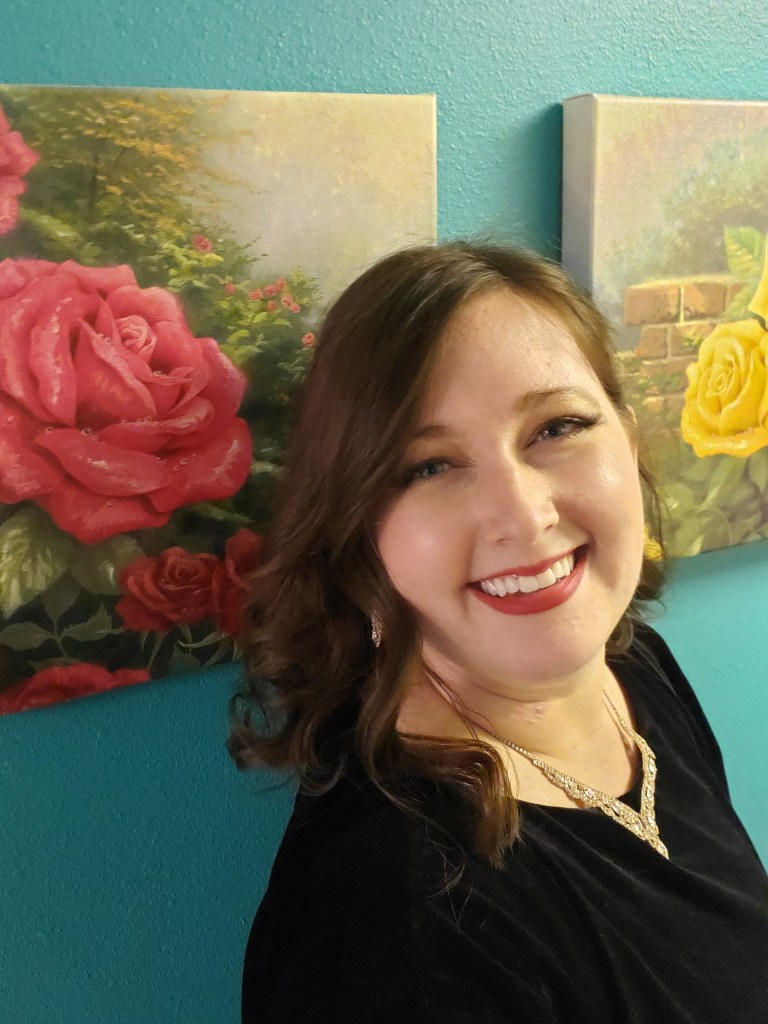
I Am a Writer
“I am sure that some are born to write as trees are born to bear leaves: for these, writing is a necessary mode of their own development. If the impulse to write survives the hope of success, then one is among these.”
~ C.S. Lewis, The Letters of C.S. Lewis to Arthur Greeves
I am a writer. And right now I am writing to the young adult audience. For me, that means my audience is ages 18-24. According to libraries and bookstores, however, the section “young adult” is synonymous with “teen.” I guess teenagers are technically young adults. But the experiences of teenagers are so vastly different from 18-24-year-olds that I don’t call myself a “teen” writer. I am a young adult writer.
It should come as no surprise that I read a lot of young adult novels (in other words: I read a lot of teen books). I read bestsellers, new titles, book club picks, and book-of-the-month award winners.
Well, I should say—I start reading those books. I don’t always finish.
The reason why is this: teen books are dark.
And I don’t understand why. So many of them have the word “dark” somewhere in the title. And most of them feature morally-gray characters who make dark decisions in a very dark world. It doesn’t help that the protagonists of these “dark” books seem to be in charge of making decisions that no teenagers should have any business making.
I would say that most teen books nowadays seem to be about a girl. We live in a world right now where “women empowerment” is a huge thing. And while I’m all for women being treated as equal to men in most ways, some writers take it too far. And not just writers of books. The movies Frozen (2013) and Maleficent (2014) are excellent examples of this; both movies go so far in “women empowerment” that the core message of both movies is actually: “men are useless.” What kind of message does that send to my nephews? And in current literature, when men are useless, the women seem to become masculine.
Many female protagonists in the teen books I’ve read recently abandon their feminine principles in favor of being a kick-butt action hero, diving into fights and wars that she has no business being in. Instead of being a soft—though present and vocal—influence, she impulsively does the first thing that will get the outcome she wants, and hang the consequences.
This concept is best illustrated with a story from when my sister was having a baby. While my sister was in labor, the doctor did something that caused my sister a lot of pain. In a reflexive move, my sister tried to push the doctor away. But the doctor told her that if she pushed him away, the baby would die. It took all my sister’s willpower, but she stopped pushing the doctor, and that baby is now a teenager. Female protagonists of current teen books, however, will push the doctor away and then try to save the baby. It doesn’t work that way!
Another story to illustrate this concept comes from my other sister, who has Down syndrome. There are times when I ask her not to do something, like take things off grocery store shelves. And sometimes she gets in a mood where the one thing I ask her not to do, is the only thing she will do. That kind of behavior is all right for little children and kids with special needs. But by the time teenagehood comes around, that kind of behavior should stop. And yet, that is exactly the behavior that teen female protagonists are exhibiting: she ignores sound advice from those wiser than her, claiming that she—and only she—knows better, in spite of the overwhelming evidence that shows she is wrong. As a result of her pride and arrogance, she blasts into disaster at full speed until she gets so snarled by her own bad decisions that she will either die or has to be rescued.
The current teen protagonist is passive-aggressive, power-hungry, crude, harsh, and calls control “love.” She stomps on the figurative hearts of those she supposedly loves, only to come back later and falsely apologize, and then repeat. The inherent things that we think of as being “feminine”—kindness, reason, problem-solving, nurturing—are gone, replaced by brash behavior: swearing, murdering, fighting unrighteously, and above all, gaining power. She makes and breaks promises as easily as she breathes, and doesn’t care whose feelings get hurt, so long as she gets what she wants.
And she’s the hero?!
Oh, but I forgot. That’s the definition of a “strong woman” nowadays.
The male counterparts of these female protagonists are also pieces of work. They are kind of like modern Mr. Rochesters, only worse. They are brooding, rude bordering on cruel, cold and cynical, and often think they are above rules and laws. Instead of being mysterious and charming, but ultimately redeemable, like Mr. Rochester, they are dangerous. They have traded in their masculine confidence for something criminal and feral.
Now, those examples are extreme cases. But sadly, it’s becoming more and more the norm in teen fiction today.
Almost gone are the girls who wade into fights only when they are hers to fight, the girls who take care of everyone around them, who offer solid advice, never reach for what isn’t hers, and who keeps her feminine principles intact. Almost gone are the girls who are offered prestige and power, but who turn it all away for a simple life. Almost gone are the heroines who use their smarts, their logic, and their dignity to navigate the world, keeping and cultivating their relationships, and leave the world better than they found it. We are quickly losing the female hero who is comfortable in her femininity and who champions manhood.
Similarly, almost gone are the boys who protect those they love without restricting them, who always take on more responsibility so that others can have a break, and who humbly seek help when solving problems. Almost gone are the boys who swallow their pride in favor of a better alternative, who see the error of their ways and who then work to correct it. We are quickly losing the male heroes who are truly heroes—those who look for goodness and who fight against evil with everything they have, those who speak up when something isn’t right, those who are comfortable in their masculinity and who champion womanhood.
Popular teen books nowadays have girls who will raze the world without blinking, who use cruelty to get what she wants, and who always manage to sleep with the male protagonist. Popular teen books nowadays have boys who are almost misogynistic in their treatment of women, who are bullies who get away with it, and who are always right in their eyes, even when they are monumentally wrong.
And that’s why my books are going to be different from mainstream teen / young adult books. I see “dark” teen books, and I feel uncomfortable. There’s too much darkness in the world already, between politics, pandemics, wars, and the rise of the LGBTQ nightmare.
What the world needs more of is light. What the world needs more of is goodness.
I like male characters who are good and strong, dependable and humble. I like female characters who are the real definition of a “strong woman”: smart, fearless, trustworthy, and completely feminine without having to stoop to promiscuity. Neither is perfect, but they are striving to be. I like having clear-cut lines between good and evil—not the “morally gray” character that has become so popular, nor the de-vilifying of the villain that has gained a lot of ground in the last few years. In my books, goodness and hard work are rewarded, while badness and laziness are punished. Kindness will be cherished while cruelty will be shunned. There will be no situations where the characters cannot find a way out. Danger, yes, but never a no-win situation. Because even in real life, there is always hope. There is always a way out. Evil isn’t nearly as smart as it thinks it is.
I aim to encourage my readers, not give them something else to worry about.
And that is why I am a writer.
 Nikki Anne Ellison
Leave a comment